
Key Takeaways from Hannover Messe 2026: The shift towards Autonomous Manufacturing
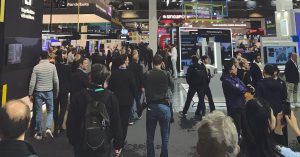 Hannover Messe 2026 appeared to signal an inflection point in industrial operations, with a strong focus on autonomous, agentic manufacturing. The event highlighted the evolving challenges and opportunities in manufacturing, particularly as the industry navigates complex supply chains, labor productivity issues, and the integration of advanced technologies, such as AI. AI-driven systems are increasingly positioned to transition from insight generation to real-time execution. Here are the key takeaways:
Planning and Scheduling: The Core of Manufacturing Execution
Conversations around planning and scheduling were prevalent throughout the event, with a noticeable focus on high-value, high-mix production environments. Planning was especially relevant when dealing with complex end goods like waste management pumps, aerospace components, and other specialized items, where long lead times for materials posed significant challenges. Scheduling and sequencing were often used interchangeably in discussions, with most attendees emphasizing the importance of tying scheduling directly to execution. Manufacturers were particularly interested in more integrated approaches that offered near real-time feedback, highlighting the need for seamless communication between the shop floor and higher-level systems.
Execution was central to most discussions, with a particular focus on improving productivity and capacity management. Gaps in expected outcomes and deviations from the plan were frequent points of frustration. Manufacturers expressed a clear need for capabilities that provided a real-time, easily accessible view of where work stood, and could dynamically adapt to changing conditions. Dashboards that showed work in progress, along with the ability to track deviations, were often mentioned as vital tools for boosting productivity.
ERP Systems: The Reality of Existing Infrastructure
ERP systems were frequently brought up, with major manufacturers often being mentioned alongside “home-grown” solutions. A common theme in conversations was the expectation that ERP systems should handle key operational tasks, yet many manufacturers found them insufficient. The gap between what ERP systems were designed to do and the actual needs of manufacturers became apparent, especially when it came to complex scheduling, real-time execution, and handling dynamic changes on the shop floor. This gap continues to reinforce the role of specialized operational layers sitting between ERP and the physical production environment.
Industrial AI: From Insight to Action
The integration of Industrial AI was a standout theme at Hannover Messe. Industrial AI has evolved from merely providing insights to autonomously acting on real-time data. This shift allows AI systems to not just analyze data but to make decisions and execute changes in production processes, such as adjusting machine parameters or re-adjusting tasks based on current conditions.
Although AI was mentioned often, manufacturers highlighted a more immediate challenge: moving away from spreadsheets and disconnected software systems to a more coherent, integrated architecture that could better organize and contextualize data. Only after this foundational step is achieved can the full potential of AI be unlocked, particularly in optimizing planning, scheduling, and execution. This aligns with a broader industry shift toward Industrial DataOps as a prerequisite for agentic systems.
In essence, rather than just gathering information, the focus is now on creating a feedback loop where data directly drives physical actions. This closed gap in automation is reshaping how factories operate, making data a dynamic tool for continuous decision-making.
The Digital Transformation of the Factory Floor
Although AI and robotics dominated much of the discussion at Hannover Messe, it became clear that many manufacturers, particularly those in high-mix, low-volume environments, are still in the early stages of digitizing their fundamental processes. Two recurring themes emerged from conversations on the stand:
- Efficient Labor Scheduling: Manufacturers are seeking approaches to address varying demand mixes, complex skills matrices, and diverse working patterns. The challenge is not just about automating tasks but ensuring that the right people with the right skills are available at the right time.
- Optimizing Production Plans: Another key challenge was generating production plans that are both realistic and optimal, able to respond to disruptions that occur in real-life factory settings. Manufacturers are focusing on systematically gathering the data needed to support decision-making and improve the agility of their operations.
While many manufacturers are looking to AI and robotics to solve some of these problems, the immediate need is for more effective data-driven solutions that can help human decision-makers make better, faster choices. This reinforces the continued importance of the “human-in-the-loop” model observed across multiple discussions. By building a solid foundation of real-time information and optimized planning, manufacturers can prepare for a more automated future, where AI plays a pivotal role in driving efficiency and resilience.
The Digital Backbone of Factories
Factories are rapidly becoming software-defined enterprises, where Operational Technology (OT) and Information Technology (IT) convergence plays a pivotal role. This convergence is transforming industrial software into the digital backbone of operations, making it a non-discretionary, high-margin part of the business. With Manufacturing Execution Systems (MES) and Manufacturing Operations Management (MOM) now unified, manufacturers are moving toward an integrated ecosystem, where real-time shop-floor data is integrated with enterprise-level business objectives, optimizing production outcomes and aligning with broader financial goals.
The shift to software-defined solutions allows manufacturers to continuously optimize operations, making the entire process more agile and responsive to changing conditions. At Hannover Messe, it was clear that the shift towards software-defined operations is pushing companies to rely on this digital backbone to maintain operational efficiency and agility.
Enabling Autonomous Operations
Connectivity has become a fundamental requirement for the effective deployment of agentic AI. As factories move toward Software-Defined Automation (SDA), a key focus is streamlining operations, which enhances flexibility, helping manufacturers overcome the complexity of integrating old and new technologies, and where Operational Technology (OT) and Information Technology (IT) are being bridged through robust, software-driven solutions. However, this connectivity is not without its challenges. Connecting different systems, hardware, and legacy equipment requires careful orchestration to create a cohesive, interoperable digital backbone.
Digital Twins and Robotics: The Physical AI Revolution
Digital twins are no longer just static visual models of the factory floor. They’ve become dynamic, operational tools that drive predictive maintenance, resource optimization, and capacity planning. Through agentic discovery and sensor fusion, digital twins are now created more quickly and efficiently, allowing manufacturers to optimize operations in real time.
Meanwhile, robotics is evolving from simple, repetitive tasks to more advanced roles. Humanoid robots and autonomous systems are now capable of operating factory environments, learning from them, and making decisions in real time. This shift is powered by technology companies, which allows robots to be trained in high-fidelity digital twins before being deployed to physical environments.
Collectively, these developments point toward a longer-term transition to more autonomous factory environments, where AI, robots, and humans collaborate to optimize production processes seamlessly.
Final Thoughts
The conversations at Hannover Messe 2026 underscored the increasing complexity of manufacturing operations and the growing need for integrated solutions that connect planning, scheduling, and execution. While AI is widely acknowledged as a future enabler, it remains a secondary concern for many manufacturers still focused on foundational challenges in digitization and process optimization. For now, solutions that offer real-time insights, dynamic replanning, and effective labor management are leading the charge in the industry’s ongoing transformation.
At the same time, Hannover Messe 2026 marked a major shift from connected enterprises to autonomous manufacturing, with a clear focus on AI-powered systems that don’t just optimize operations but actively drive real-time decisions across the factory floor. The integration of digital twins, AI, robotics, and software-defined automation is transforming factory operations, making them more flexible, efficient, and autonomous.
As these technologies continue to evolve, manufacturers are increasingly adopting agentic systems that not only anticipate disruptions but also adjust operations in real time to optimize performance. The future of manufacturing lies in ecosystems that can dynamically adapt to changing conditions, continuously improving both productivity and efficiency.
This shift represents both a significant opportunity and a challenge. The race to develop and deploy these advanced technologies is accelerating, and those who can master the convergence of AI, connectivity, and human oversight will be the leaders in the next era of industrial innovation.